
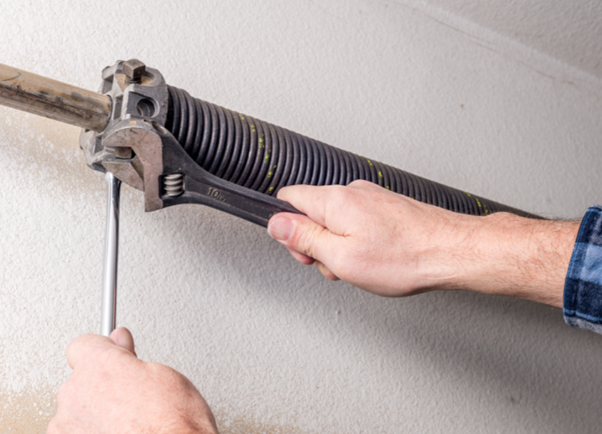
A broken spring is not a minor inconvenience. It is a structural failure that directly affects safety, load balance, and system integrity.
What Broken Spring Repair Actually Involves
At American Star Garage Doors, broken garage door spring repair is treated as a precision-driven safety intervention, not a quick fix. Springs carry the full weight of the garage door, often exceeding 150 to 300 pounds, and any failure disrupts the entire system.
In Torrance and across the South Bay, environmental exposure and daily usage accelerate spring fatigue. Repair requires accurate load matching, correct spring selection, and controlled tension calibration. Without this, even a replaced spring can fail prematurely or damage other components.
The objective is not just restoring function, but rebalancing the system for long-term reliability.
Identify Why Springs Fail Under Real Conditions
Garage door springs operate under constant tension. Each open and close cycle contributes to gradual wear, often unnoticed until failure occurs.
In Torrance, we regularly see three contributing factors:
- Cycle fatigue: Standard springs are rated for a fixed number of cycles, often between 10,000 and 20,000
- Coastal exposure: Moisture and salt air accelerate corrosion and weaken metal integrity
- Improper calibration: Incorrect tension from prior installations increases strain
A spring rarely breaks without warning. Subtle changes in door movement, sound, or balance often appear first.
Industry Insight:
Most spring failures are predictable. The issue is not sudden failure, but delayed response to early warning signs.
Understand the Mechanics Behind Safe Spring Replacement
Replacing a broken spring is not interchangeable with general repair work. It requires precise mechanical alignment and controlled force management.
At American Star Garage Doors, the process typically includes:
System Decompression
- Releasing residual tension safely before removal
- Preventing sudden energy discharge
Spring Matching
- Selecting springs based on door weight, size, and usage
- Avoiding generic replacements that compromise balance
Tension Calibration
- Applying exact tension levels to restore equilibrium
- Ensuring smooth, controlled operation
System Rebalance Testing
- Verifying that the door remains stable at multiple positions
- Confirming minimal strain on the opener
Each step directly influences safety and longevity. Skipping calibration often results in recurring failures or motor damage.
Evaluate When Repair Becomes Replacement
Not every spring failure should be treated as an isolated repair. In some cases, the broader system condition must be considered.
Repair is typically sufficient when:
- The system is relatively new
- Damage is limited to one spring
- Other components show minimal wear
Replacement becomes the better option when:
- Springs have failed multiple times
- The system shows uneven wear across components
- The door struggles to maintain balance even after adjustment
This is where insights from garage door replacement experts in Torrance become relevant. Evaluating the system holistically prevents repeated short-term fixes.
Interpretation:
Repeated repairs often indicate underlying system imbalance rather than isolated component failure.
Avoid High-Risk DIY and Shortcuts
Spring repair is one of the highest-risk areas in garage door systems. The stored energy within a torsion spring can cause serious injury if mishandled.
Common risks associated with DIY attempts include:
- Sudden release of tension during removal
- Incorrect spring sizing leading to imbalance
- Damage to cables, tracks, or opener systems
Even experienced homeowners underestimate the force involved.
Broader Observation:
The perceived simplicity of garage door systems often leads to underestimating their mechanical complexity. Springs, in particular, operate closer to industrial load systems than residential fixtures.
Apply a Structured Decision Framework
Clarity in decision-making often reduces both cost and risk. We guide clients through a structured evaluation based on system condition and usage.
When Immediate Repair Is the Right Move
- First-time spring failure
- System is otherwise stable
- Door alignment remains consistent
When a Broader System Review Is Needed
- Repeated spring failures within a short timeframe
- Noticeable strain on opener or uneven movement
- Aging system with multiple worn components
Decision Lens:
Focus on system balance rather than component replacement alone. A well-balanced system reduces stress across all moving parts.
Plan for Long-Term System Stabilit
A properly repaired spring system should deliver consistent performance over thousands of cycles. However, long-term stability depends on more than the spring itself.
From our experience, sustained performance comes from:
- Correct initial calibration
- Periodic inspection of tension and alignment
- Early intervention when minor issues appear
An often overlooked benefit is smoother and quieter operation, which reflects proper system balance rather than just new components.
Industry Insight:
Customers tend to associate value with visible upgrades. In reality, the most valuable improvements are often mechanical and not immediately visible.
A Clear Perspective on Spring Repair Decisions
Broken garage door springs signal more than a single component failure. They reveal how well the system has been calibrated, maintained, and aligned over time.
At American Star Garage Doors, the focus remains on restoring balance, not just replacing parts. The difference becomes evident in how the system performs months and years after the repair.
FAQs
What causes broken garage door springs most frequently?
Spring failure is typically caused by cycle fatigue, corrosion, and improper tension calibration. In areas like Torrance, coastal exposure accelerates wear. Regular use combined with environmental stress gradually weakens the spring until it can no longer support the door’s weight.
How dangerous is broken garage door spring repair?
Repairing a broken spring can be hazardous due to the high tension stored within the system. Improper handling can lead to sudden release of energy, causing injury or damage. Professional repair ensures safe decompression and precise reinstallation.
How long does a spring repair usually last?
A properly installed and calibrated spring can last between 7 to 12 years, depending on usage frequency and environmental conditions. Regular maintenance and correct tension adjustment help extend the lifespan significantly.
Should both springs be replaced at the same time?
In most cases, replacing both springs is recommended. Springs wear at a similar rate, and replacing only one can create imbalance in the system. Balanced replacement ensures smoother operation and reduces strain on other components.
When should homeowners consider full system replacement instead of repair?
If the system shows repeated failures, uneven wear, or declining performance, replacement may be more cost-effective. Consulting garage door replacement experts in Torrance helps determine whether continued repairs will lead to higher long-term costs.
What are early signs of spring failure?
Common indicators include loud snapping sounds, uneven door movement, difficulty opening, or visible gaps in the spring. Addressing these signs early can prevent sudden failure and reduce the need for more extensive repairs.
